We recently had the opportunity to visit the Oracle Innovation Lab for Oracle AI and Robotics for the Built World Forum 2026.
It was an enlightening experience. The lab brings together a wide range of technologies, from AI and robotics to Oracle's suite of construction tools. Seeing so many solutions side by side made one thing very clear: innovation in construction is no longer about whether technology can do something impressive. It is about whether it can solve a specific problem inside a real project workflow.
Whether the solution is a robot or an AI tool, the use case needs to be narrow, focused, and tied to how people actually work. Hardware alone is not enough. Software alone is not enough. The value comes when the technology is connected to the right process, the right source documents, and the right decision points.
This is especially true for AI.
Construction systems still do not talk to each other
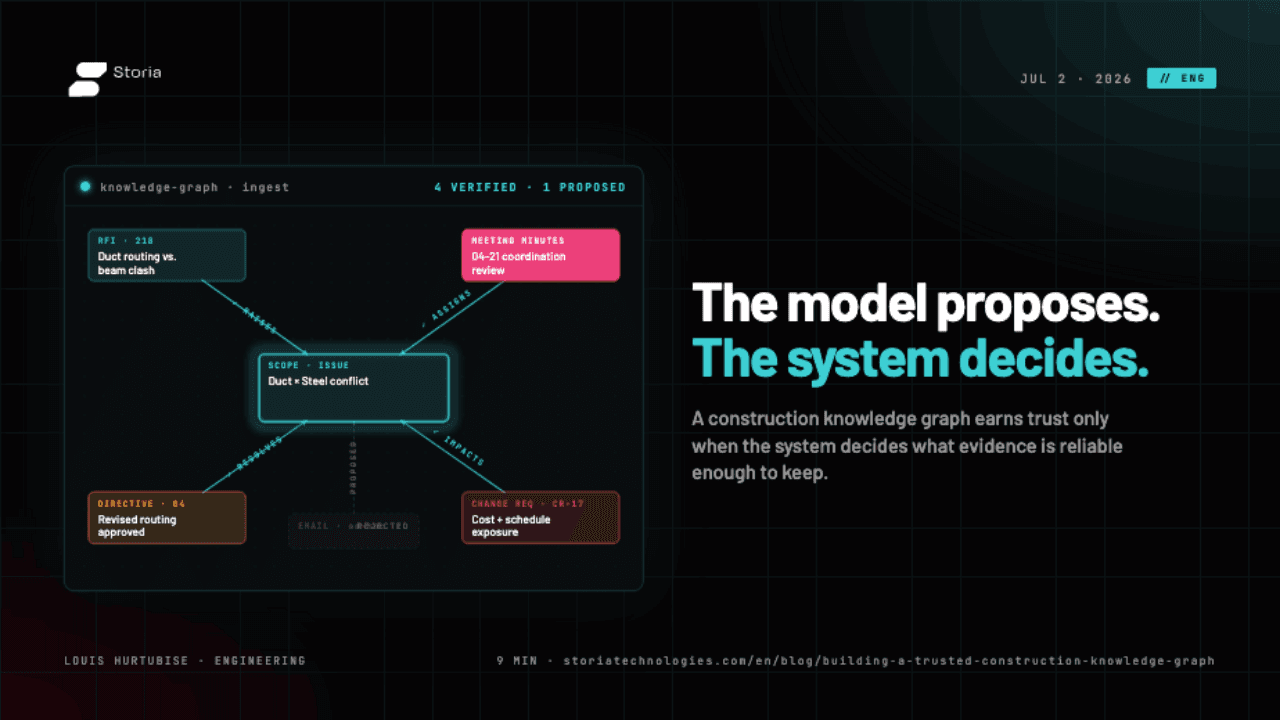
A lot of the conversations we had came back to the same challenge: construction systems are powerful, but they still do not talk to each other well enough. Project information lives across schedules, contracts, specifications, submittals, RFIs, change events, meeting minutes, emails, procurement tools, and platforms like Aconex or Unifier. Each system has value, but the real opportunity is in connecting the dots between them.
That is where Storia fits in.
Our demo focused on how Storia helps project teams tackle claims by grounding insights in the source documents of the project. It also showed how Storia connects the dots between project information and schedule. Instead of treating AI as a generic assistant or another disconnected tool, Storia is designed to sit on top of the documentation, communications, and project records that already exist.
The output still has to land somewhere useful
One question that came up repeatedly was where certain workflows should live. For example, if Storia identifies a potential claim event, should that event be pushed back into Aconex or Unifier? Should alerts and recommendations remain in Storia, or should they trigger actions inside the client's existing project management system? These are exactly the kinds of questions that matter, because they move the conversation from "Can AI find this?" to "How does this actually help the project team act?"
The same applies to submittals, specifications, procurement, QA/QC, and schedule integration. AI can help surface patterns, identify gaps, and connect related information, but the output still needs to land somewhere useful. A better schedule, for example, may not be the starting point. It may be the side effect of better-connected project information.
Construction needs a common foundation
That was probably the most important lesson from the day: construction does not need more isolated tools. It needs a common foundation.
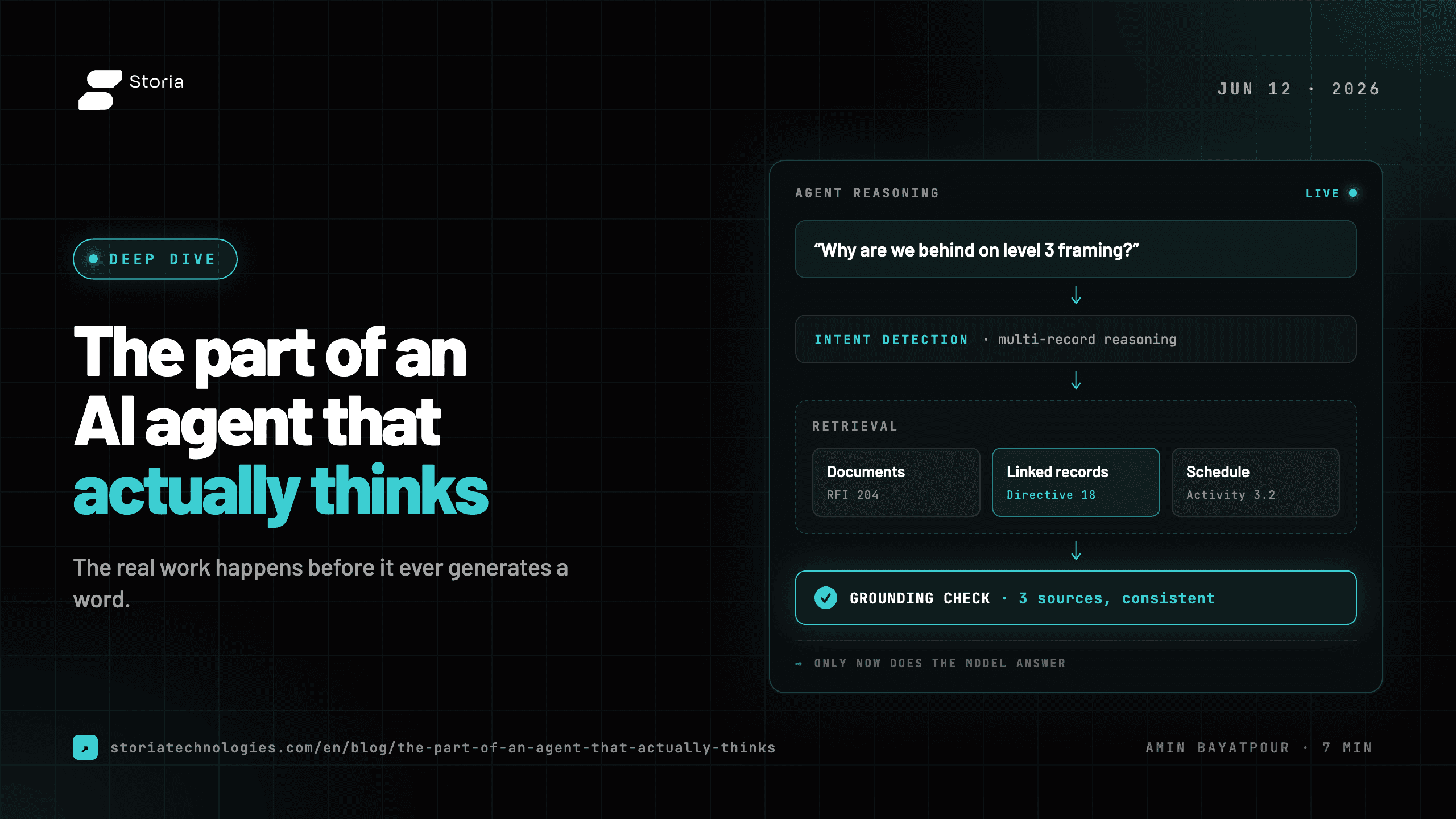
For AI to be truly useful in construction, it needs to be grounded in the core data of the project: contracts, schedules, specifications, cost information, communications, documentation, and decisions. Any new tool entering the ecosystem should either contribute to that foundation or make it easier to manipulate and act on it.
The interest from owners, general contractors, and technology providers is clearly there. The challenge now is not convincing the industry that innovation matters. It is helping teams screen through a growing number of solutions and understand which ones are practical, focused, and capable of fitting into real delivery environments.
Validating and clarifying
For us, the Oracle Innovation Lab was both validating and clarifying.
It validated that the problems Storia is working on are real: fragmented information, disconnected systems, slow access to project context, and the need for proactive decision-making.
It also clarified that the future of construction intelligence will not come from one tool doing everything. It will come from combining the right tools around a shared data foundation, with AI helping teams understand, connect, and act on the information already being generated every day.
We left the lab excited by the conversations, grateful for the opportunity to showcase Storia, and even more convinced that the next wave of construction technology will be built around focused workflows, connected systems, and intelligence grounded in real project data.
Julian Conte Product Manager at Storia. Reach out at info@storiatechnologies.com if you want to talk about grounding construction AI in your project's real records.